Francisco Suárez entered the Society of Jesus at Salamanca in 1564, after being turned away once. His Disputationes metaphysicae came from Salamanca's presses in 1597, arranged by question rather than by the chapters of Aristotle, and Catholic and Protestant universities taught from it for two centuries.
Against the Thomists he denied a real distinction of essence and existence. On grace he refined Molina into congruism. His De legibus (1612) grounds political power in the community; his Defensio fidei was burned in London by order of James I. When Richard Lynch, the first Jesuit to hold a university chair at Salamanca, took its chair of Vespers in 1668, the Suárezian school had a pulpit.
Not every Jesuit followed him. Vázquez was his rival at Rome and Alcalá; Hurtado and Arriaga took his questions further on their own.
The line of the school
6 authors, 3 works in the librarySuárez and his school
His followers taught in the Society's colleges, and from 1668 in a Salamanca chair.
- 1548–1617
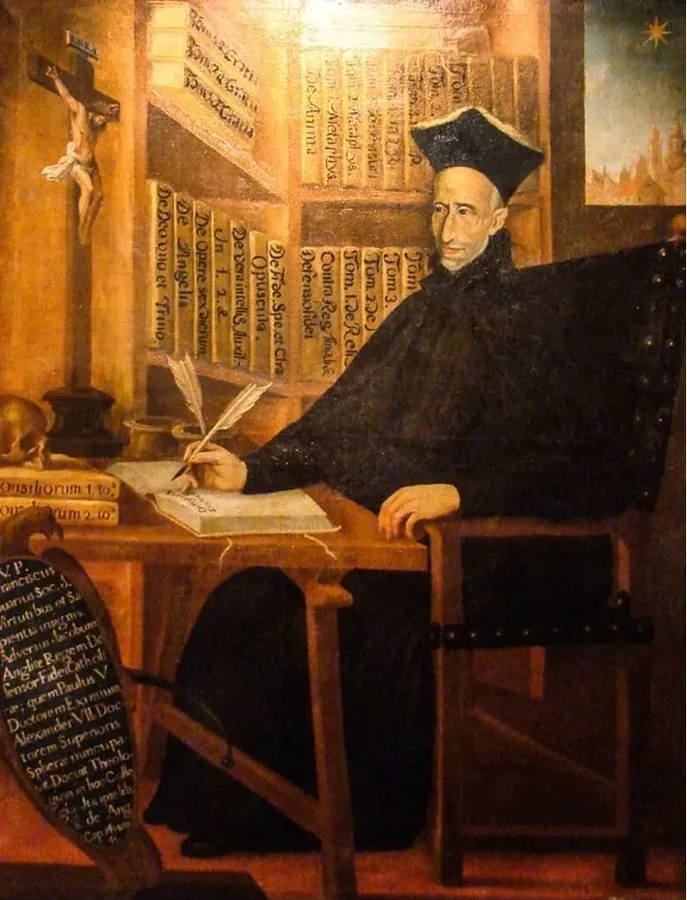 Francisco SuárezThe Doctor Eximius: the Disputationes metaphysicae, De legibus, and the Defensio fidei.Jesuit · Latin, English
- 1610–1676Richard LynchA Galway Jesuit who taught theology at Salamanca for eighteen years, and held its chair of Vespers from 1668 to 1671.Jesuit · not yet in the library
- 1624–1705Tirso González de SantallaTaught at Salamanca, then as General of the Society fought probabilism.Jesuit · not yet in the library
The Society's other masters
Jesuits before him, beside him and after him who answered his questions their own way, from Coimbra and Rome to Prague and Lima.
- 1528–1599
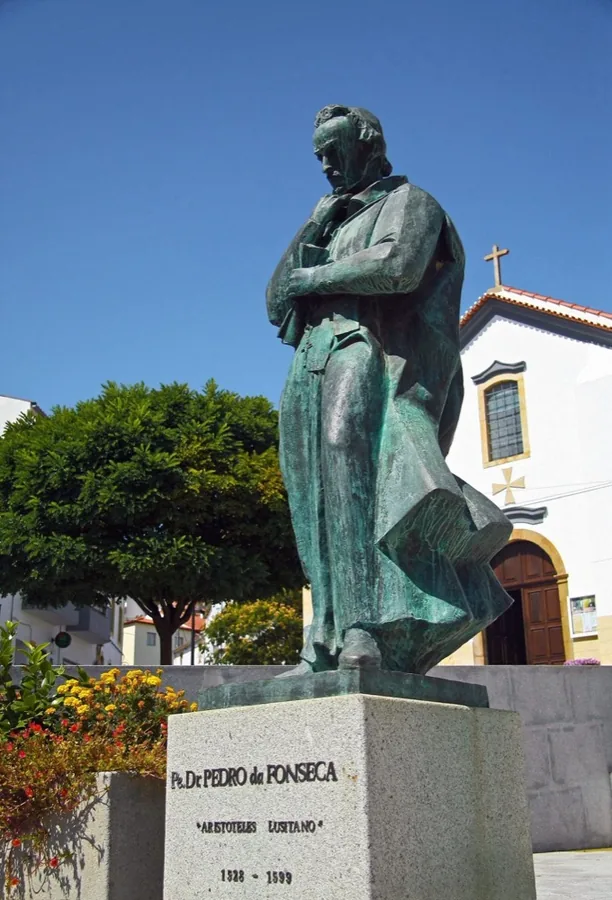 Pedro da FonsecaThe “Portuguese Aristotle”: he began the Coimbra course, and spoke of middle knowledge before Molina.Jesuit · Latin, English
- 1535–1600
 Luis de MolinaConcordia, 1588: middle knowledge, and the quarrel with Báñez that Suárez joined.Jesuit · no works here yet
- 1549–1604Gabriel VázquezSuárez's rival at Rome and Alcalá, and seldom of his mind.Jesuit · not yet in the library
- 1562–1632
 Diego Ruiz de MontoyaTaught theology at Córdoba and Seville for twenty years; his volumes on the Prima Pars, from De Trinitate (1625) to De providentia (1631), set the Fathers beside the schoolmen.Jesuit · no works here yet
- 1578–1641Pedro Hurtado de MendozaRead Suárez closely at Salamanca, and argued with him.Jesuit · no works here yet
- 1592–1667Rodrigo de ArriagaA Spaniard at Prague whose Cursus philosophicus argued past Suárez.Jesuit · not yet in the library
- 1597–1657Leonardo de PeñafielBorn at Riobamba; prime professor of theology at San Pablo in Lima, then provincial of Peru. His disputations on God, the Incarnation and faith were printed after his death.Jesuit · no works here yet
- todayThe next reader of SuárezThe line continues with whoever reads, translates or corrects these texts now.Read, translate or correct a text of the school →
Further reading
- “Francisco Suárez”, Stanford Encyclopedia of PhilosophyMetaphysics, law and political authority in one career.
- Sydney Penner, “Francisco Suárez”, Internet Encyclopedia of PhilosophyEnds with his legacy: who followed him, and who only seemed to.
- Sven K. Knebel, SuarezismusThe school after Suárez, as a history of its concepts. In German.