In 1526 Francisco de Vitoria, a Dominican trained in Paris, won the prime chair of theology at Salamanca and lectured on the Summa of Thomas Aquinas in place of Lombard's Sentences. His students, and theirs, made the university the centre of Catholic theology for a century.
Salamanca was never one voice. The Dominicans of San Esteban held the great chairs; beside them taught and studied Franciscans, Augustinians, Mercedarians, the new Society of Jesus, and the canonists of the law faculty. Together they took Thomas's principles to questions he never faced: the conquest of the Americas and the rights of its peoples, the law of nations, money and fair prices, the Council of Trent.
And they argued. Over grace and free choice Báñez and the Dominicans met the Jesuits: in 1582, six years before Molina's Concordia, the Augustinian Luis de León was denounced for taking the Jesuit side. In the next century the Discalced Carmelites of San Elías gathered the Thomist side of the argument into one great course, the Cursus theologicus of the Salmanticenses.
The line of the school
4 authors, 9 works in the library →Dominicans
From Vitoria to Báñez the friars of San Esteban held the prime chair of theology for most of the century, and read Thomas article by article.
- c. 1483–1546Francisco de VitoriaThe founder. His lectures on the Indies made him a founder of modern international law.Dominican · not yet in the library
- 1494–1560Domingo de SotoDe iustitia et iure, and the theology of the Council of Trent.Dominican · not yet in the library
- 1509–1560
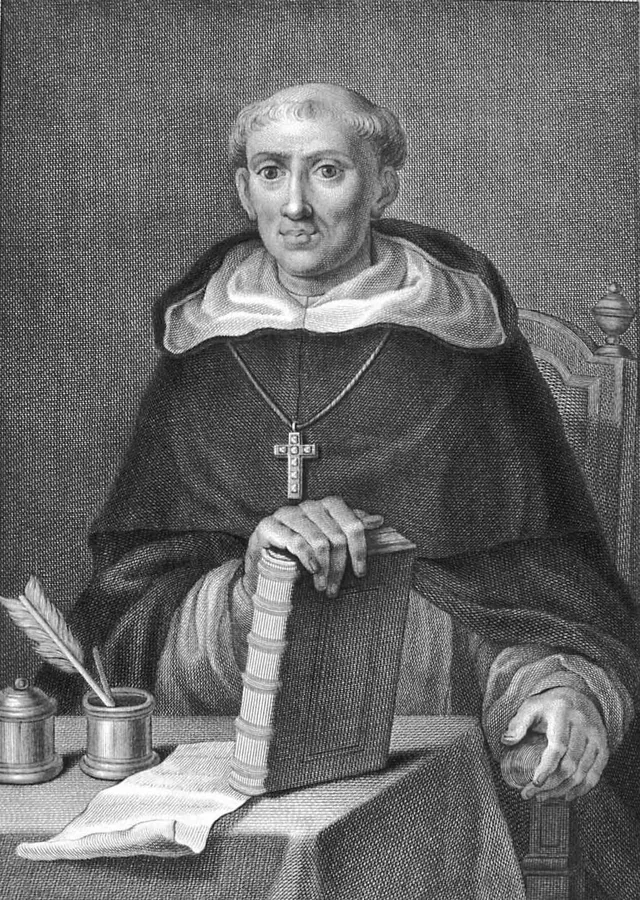 Melchor CanoVitoria's successor in the prime chair. De locis theologicis gave the school its method.Dominican · Latin, English
- 1527–1580Bartolomé de MedinaCommentator on the Prima Secundae, remembered for the first statement of probabilism.Dominican · not yet in the library
- 1528–1604Domingo BáñezHolder of the prime chair from 1581, and Molina's great opponent on grace.Dominican · Latin, English, Spanish
Franciscans
Present from the first generation, and with the Dominicans at Trent.
- 1495–1558Alfonso de CastroTaught at Salamanca and sat at Trent: Adversus omnes haereses, and a treatise on the just punishment of heretics.Franciscan · not yet in the library
Augustinians
They read Thomas their own way, and on grace crossed the Dominicans in public.
- 1527–1591Luis de LeónPoet and translator of the Song of Songs, imprisoned by the Inquisition 1572–76; in 1582 he took the Jesuit side on grace against Báñez.Augustinian · not yet in the library
- 1545–1592Pedro de AragónDe iustitia et iure: the Secunda Secundae on contracts, prices and restitution.Augustinian · not yet in the library
Mercedarians
The Order of Mercy taught Thomas at Salamanca too, and had its own voice in the disputes over grace.
- 1540–1607Francisco ZumelMaster at Salamanca and General of his order; commented on the Prima Pars and took part in the grace disputes of the 1590s.Mercedarian · not yet in the library
Jesuits
Many of the Society's first theologians studied at Salamanca; then it defended Molina against Báñez on grace and free choice.
- 1532–1596Francisco de ToledoSoto's student at Salamanca, then the first Jesuit cardinal; commentaries on Aristotle and the Summa.Jesuit · not yet in the library
- 1548–1617
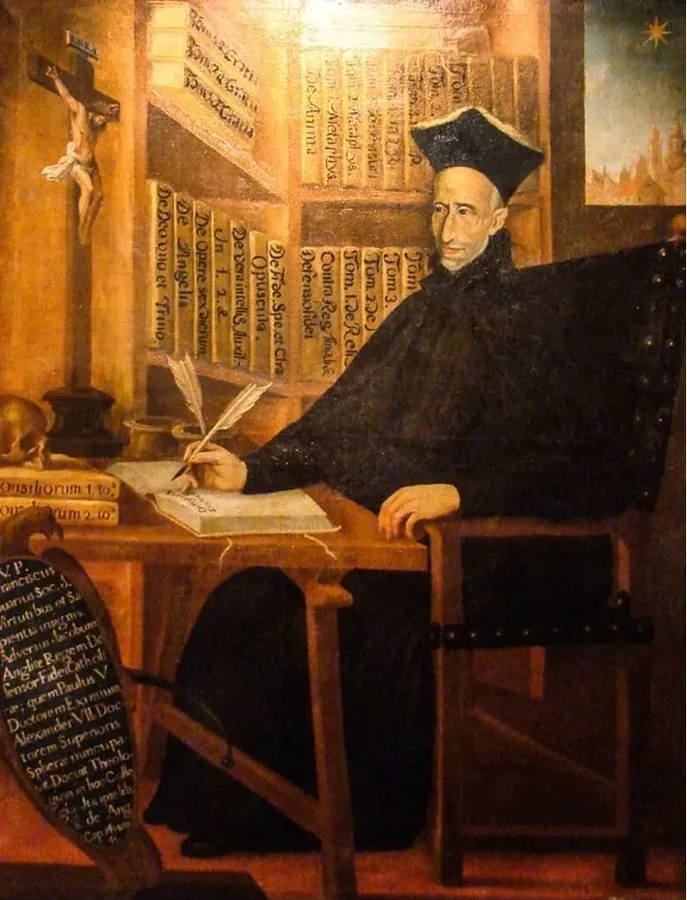 Francisco SuárezStudied at Salamanca and taught there in the 1590s. The Disputationes metaphysicae set metaphysics out as a science of its own.Jesuit · Latin, English
- 1549–1603Gregorio de ValenciaFormed at Salamanca, taught at Ingolstadt, and defended Molina before the Roman congregation on grace.Jesuit · not yet in the library
Carmelites
The Discalced Carmelites of San Elías wrote the school's last great courses, on the Dominican side of the grace dispute.
- 1631–1712The SalmanticensesThe Discalced Carmelites of San Elías: a Cursus theologicus on the whole Summa, written across three generations.Carmelite · Latin, English
Canonists
Not every master was a friar: in the law faculty the same questions of justice, money and dominion were argued as law.
- 1492–1586Martín de AzpilcuetaDoctor Navarrus: canon law, and an early account of money's value by its scarcity.Augustinian canon · not yet in the library
- 1512–1577Diego de CovarrubiasAzpilcueta's student in the law faculty; jurist, bishop, and a voice at Trent.not yet in the library
- todayThe next reader of SalamancaThe line continues with whoever reads, translates or corrects these texts now.Read, translate or correct a text of the school →