John Duns Scotus died at Cologne in 1308, leaving his commentaries on the Sentences in drafts and student reports. The Franciscans took him as their doctor. Where Thomas's commentators held a real distinction of essence and existence, the Scotists held the univocity of being, the formal distinction and the primacy of the will, and they argued for the Immaculate Conception centuries before it was defined.
Antonius Andreas and Francis of Meyronnes taught his positions within a generation. In the seventeenth century the Irish Franciscans of Louvain and Rome, Hugh MacCaghwell, John Punch and Luke Wadding, edited his works in twelve volumes, and Mastri and Belluti wrote the complete Scotist course of philosophy. Frassen and Dupasquier fitted it to the colleges of France, and Briceño, born in Chile and trained in Lima, wrote with it what is often called the first major philosophical work by an author born in the Americas.
In 1950 the Scotistic Commission under Carlo Balić published the first volume of the critical edition, and found that some of what Wadding printed was not Scotus's.
The line of the school
10 authors, 13 works in the library →Scotus and his first students
His students, at Paris and in Aragon, set out his teaching for the schools.
- c. 1266–1308
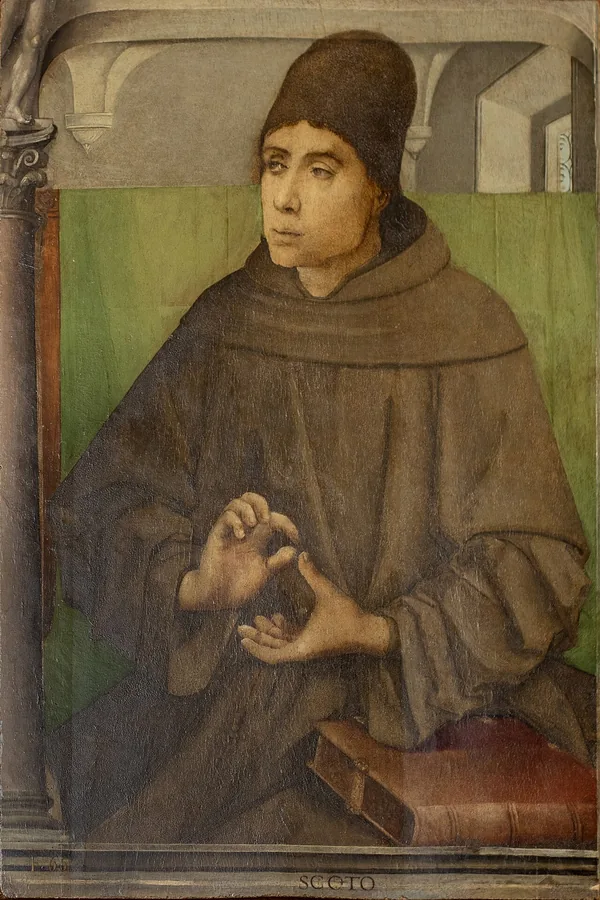 John Duns ScotusThe Subtle Doctor: the Ordinatio, the Quodlibet, and the questions on Aristotle.Franciscan · Latin, English
- c. 1280–1320Antonius AndreasDoctor dulcifluus, who set out his master's teaching for the schools.Franciscan · no works here yet
- c. 1280–1340Peter ThomaeLector at the Franciscan school of Barcelona from 1314: the Formalitates, and an early Scotist account of analogy.Franciscan · not yet in the library
- c. 1285–1328Francis of MeyronnesMagister abstractionum: the formal distinction pressed to its limits.Franciscan · no works here yet
Printers, editors and courses
From Padua to Lima to Prague the Franciscans taught his philosophy and theology as complete courses.
- 1436–1517Antonio TrombettaHeld Padua's public chair of metaphysics in via Scoti, against the Averroists; later bishop of Urbino.Franciscan · not yet in the library
- d. 1520Francesco LichettoThe commentary on the Ordinatio printed with Scotus's own text.Franciscan · no works here yet
- 1571–1626Hugh MacCaghwellCavellus: commentator on the Sentences at Louvain, and Archbishop of Armagh for his last months.Franciscan · not yet in the library
- 1587–1668Alonso BriceñoBorn in Chile and trained in Lima: the Celebriores controversiae, often called the first major philosophical work by an American-born author.Franciscan · Latin, English
- 1588–1657
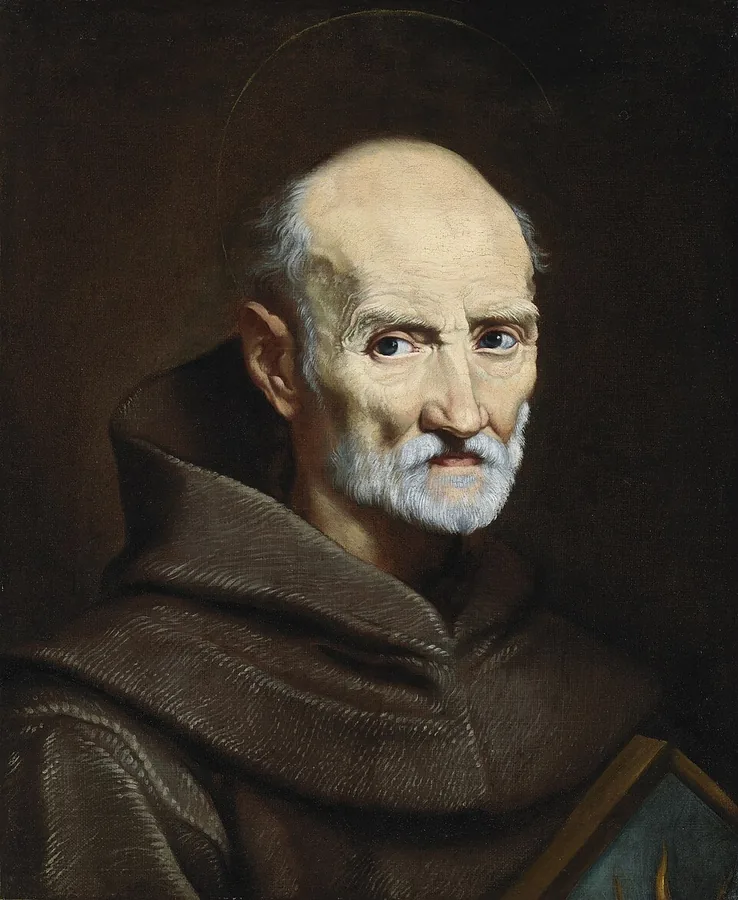 Luke WaddingScotus's works in twelve volumes, Lyon 1639, edited with the Irish Franciscans of St Isidore's.Franciscan · no works here yet
- 1600–1676Bonaventura BellutiMastri's partner in the Scotist course of philosophy.Franciscan · not yet in the library
- 1602–1673
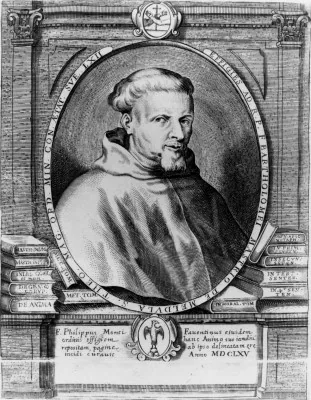 Bartolomeo MastriWith Belluti, the complete Scotist course of philosophy; on his own, its theology on the four books of the Sentences.Franciscan · no works here yet
- c. 1603–1661John PunchPonce: courses of philosophy and theology, and notes for Wadding's edition.Franciscan · not yet in the library
- 1612–1693Lorenzo Brancati di LauriaCommented on the third book of the Sentences; later a cardinal and Vatican librarian.Franciscan · not yet in the library
- 1620–1711Claude FrassenScotus Academicus: Scotist theology for the University of Paris.Franciscan · Latin, English, Spanish
- 1630–1718Sébastien DupasquierScotist philosophy and theology, each gathered into a Summa.Franciscan · Latin
- 1637–1704Bernard SannigThe Schola theologica scotistarum (Prague, 1679): a complete Scotist course for the friars of Bohemia.Franciscan · not yet in the library
- 1662–1738Girolamo da MontefortinoScotus's teaching rearranged in the order of Thomas's Summa.Franciscan · no works here yet
The critical edition
Since 1950 the Vatican edition has been sorting Scotus's own words from what was printed under his name.
- 1899–1977Carlo BalićLed the commission that began the critical edition of Scotus in 1950.Franciscan · not yet in the library
- todayThe next reader of ScotusThe line continues with whoever reads, translates or corrects these texts now.Read, translate or correct a text of the school →
Further reading
- “John Duns Scotus”, Stanford Encyclopedia of PhilosophyUnivocity, the formal distinction and the will, with a guide to which works are his.
- Richard Cross, Duns ScotusHis theology and philosophy in one short book.
- Parthenius Minges, “Scotism and Scotists”The Catholic Encyclopedia of 1912: the school's masters, century by century.