Every scholastic was an Augustinian of some kind: Lombard's Sentences are made largely of Augustine, and Thomas cites him more than any other Father. But on grace and predestination Augustine had to be defended almost at once. Prosper of Aquitaine answered the monks of Marseille; Fulgentius of Ruspe carried the argument on in Vandal Africa.
The Order of St Augustine, united in 1256, made one of its own their doctor. Giles of Rome had heard Thomas at Paris; in 1287 the general chapter bound every lector of the order to his teaching. Gregory of Rimini read Augustine on grace so strictly that his critics called him tortor infantium, the torturer of infants.
In the seventeenth and eighteenth centuries Noris, Bellelli and Berti made Augustinian grace a third school beside the Thomists and the Molinists. They were accused of Jansenism; Benedict XIV refused to condemn them.
The line of the school
4 authors, 11 works in the libraryAugustine and his defenders
Within a century of his death his disciples were answering his critics in Gaul and Africa.
- 354–430
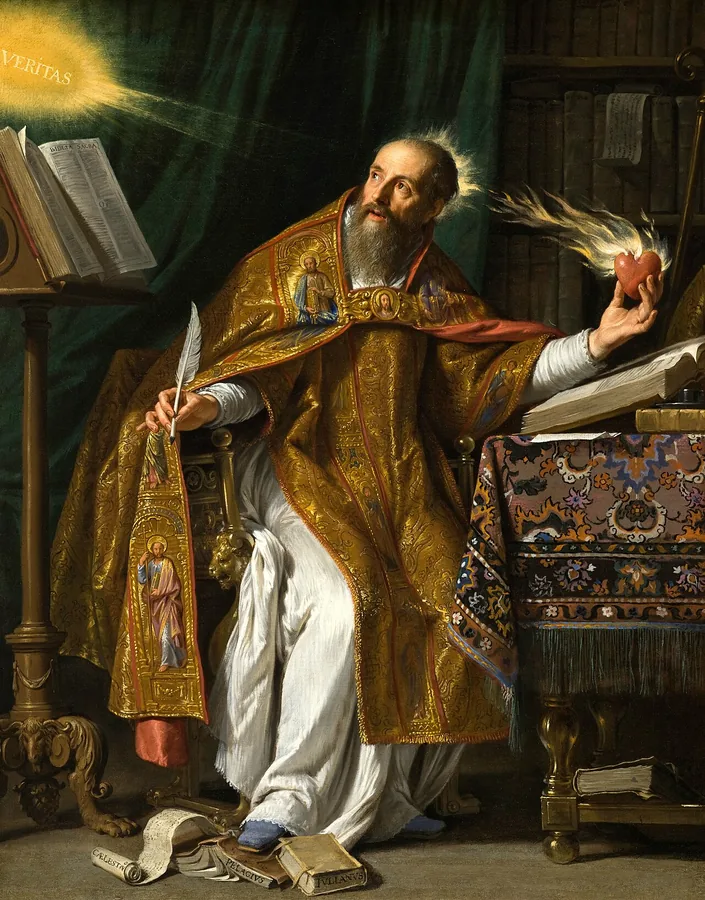 Augustine of HippoThe Confessions, On the Trinity, The City of God, and the anti-Pelagian works.Latin, English
- c. 390–455
 Prosper of AquitaineAugustine's defender in Gaul against the monks of Marseille.Latin
- c. 468–533
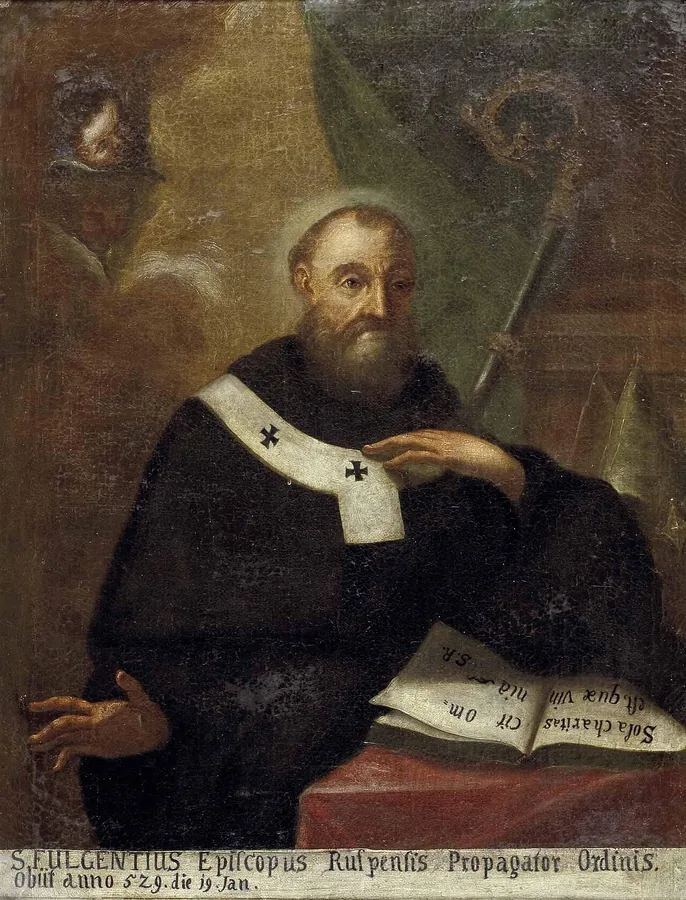 Fulgentius of RuspeBishop of Ruspe in Vandal Africa, Augustine's disciple on grace and the Trinity.Latin
The friars' school
From 1287 the Order of St Augustine taught Giles of Rome; Gregory of Rimini gave it a second voice.
- c. 1243–1316
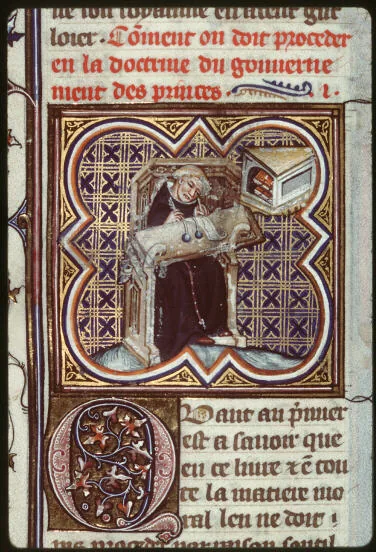 Giles of RomeStudent of Thomas and doctor of his order; his De ecclesiastica potestate stands behind Unam sanctam.Augustinian · Latin
- c. 1255–1308James of ViterboDe regimine christiano, 1302: the first treatise on the Church as a kingdom.Augustinian · not yet in the library
- c. 1295–1357Thomas of StrasbourgPrior general and commentator on the Sentences, in Giles's line.Augustinian · not yet in the library
- c. 1300–1358Gregory of RiminiThe Lectura on the Sentences: Augustine read strictly, on knowledge and on grace.Augustinian · not yet in the library
- c. 1300–1366Alphonsus Vargas of ToledoCommented on the Sentences at Paris; later archbishop of Seville.Augustinian · not yet in the library
- c. 1300–1373Hugolinus of OrvietoParis master and prior general; argued with Giles as often as he followed him.Augustinian · not yet in the library
The school of grace
Augustine on grace, between the Thomists and the Molinists.
- 1631–1704Enrico NorisHistoria Pelagiana, 1673; cardinal and Vatican librarian despite the charge of Jansenism.Augustinian · not yet in the library
- 1675–1742Fulgenzio BellelliMens Augustini: what Augustine meant on grace, argued against Molinists and Jansenists alike.Augustinian · not yet in the library
- 1696–1766Giovanni Lorenzo BertiDe theologicis disciplinis, the school's complete course; Benedict XIV defended it.Augustinian · not yet in the library
- todayThe next reader of AugustineThe line continues with whoever reads, translates or corrects these texts now.Read, translate or correct a text of the school →
Further reading
- “Saint Augustine”, Stanford Encyclopedia of PhilosophyThe master's philosophy, and its long afterlife.
- “Giles of Rome”, Stanford Encyclopedia of PhilosophyThe order's doctor: being, the soul and the power of the Church.
- “Gregory of Rimini”, Stanford Encyclopedia of PhilosophyThe school's second voice, and the strict reading of Augustine.