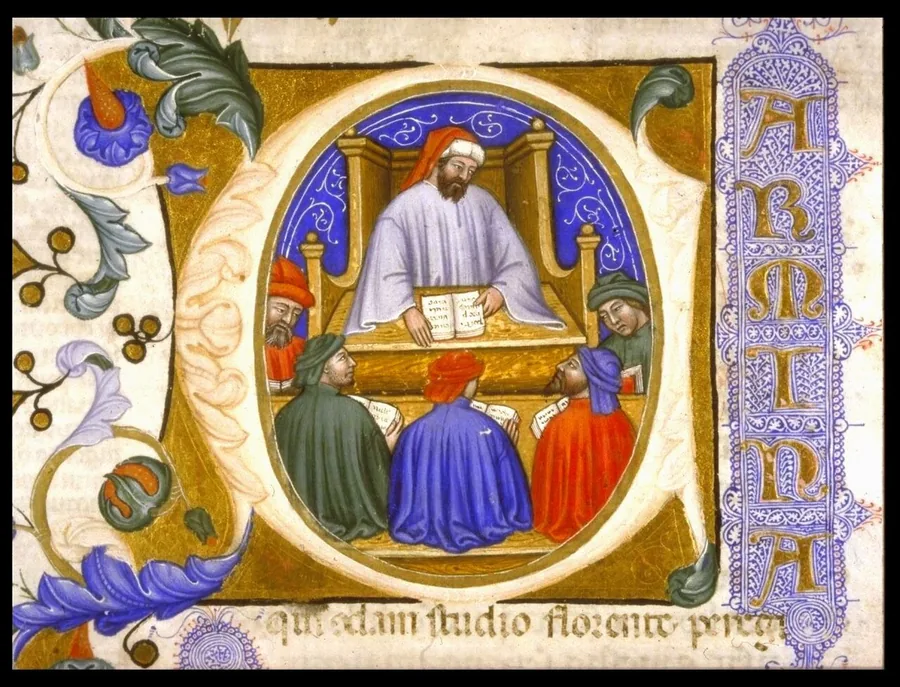
Author
Boethius
480–524
Boethius (c. 480–524) was a Roman aristocrat who served the Ostrogothic king Theodoric, becoming consul in 510 and master of offices around 522. Accused of treason, he was imprisoned at Pavia and executed. He is venerated at Pavia as Saint Severinus Boethius.
He set out to translate and comment on the whole of Plato and Aristotle. He completed only part of the plan, chiefly Aristotle's logic and Porphyry's Isagoge, but for six centuries these translations were nearly all the Latin West had of Aristotle. His theological tractates applied the vocabulary of logic to the Trinity and the person of Christ, and his definitions of person, of eternity and of happiness were quoted by every scholastic who followed.
The library holds the Consolation of Philosophy, written in prison, and his five theological tractates, including The Trinity Is One God, Not Three Gods and the treatise known as De hebdomadibus on how substances are good. The Consolation is the natural starting point; the tractates are the texts Thomas Aquinas and others wrote commentaries on.
Works
Texts currently available in the library.
The Consolation of Philosophy
524Boethius's prison dialogue with Lady Philosophy on fortune, happiness, providence, freedom, and divine foreknowledge.
Against Eutyches and Nestorius
Boethius's Christological treatise defining person and nature against the opposed errors of Eutyches and Nestorius.
How Substances Can Be Good in Virtue of Their Existence Without Being Absolute Goods
The tractate commonly called De hebdomadibus, on how created beings are good without being goodness itself.
On the Catholic Faith
A concise exposition of creation, the Trinity, the Incarnation, redemption, and Christian hope.
The Trinity Is One God, Not Three Gods
Boethius's logical and metaphysical account of how the three divine persons are one God.
Whether Father, Son, and Holy Spirit May Be Substantially Predicated of the Divinity
A short treatment of substantial and relative predication in Trinitarian theology.