Author
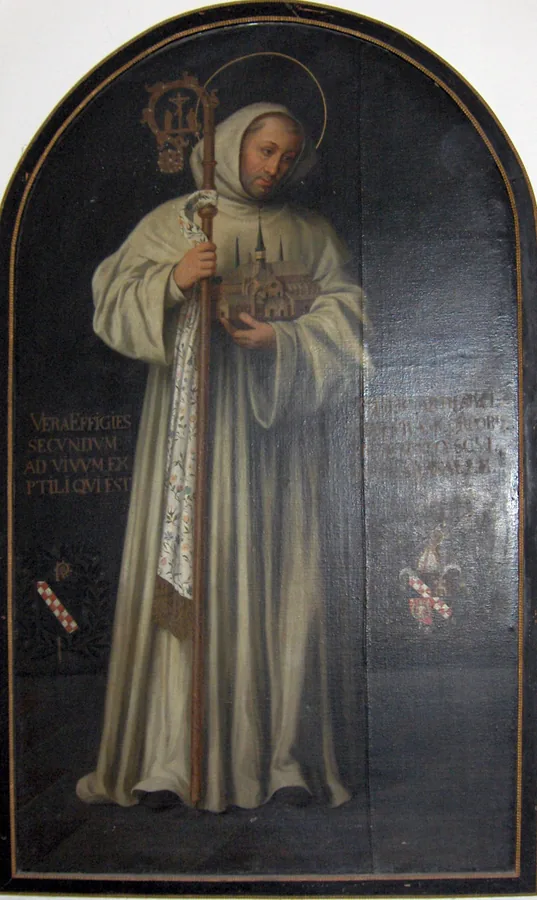
Bernard of Clairvaux
1090–1153
Bernard (1090–1153) was born near Dijon in Burgundy and in 1113 entered the reformed monastery of Cîteaux with some thirty companions. Two years later he was sent to found Clairvaux, which he governed as abbot until his death and from which some seventy Cistercian houses were founded in his lifetime. He was canonized in 1174 and declared a Doctor of the Church in 1830.
Bernard was the most influential churchman of his generation: he secured recognition for Innocent II in the schism of 1130, preached the Second Crusade, and opposed Peter Abelard at the Council of Sens. His sermons on the Song of Songs and his treatises on grace, free choice and the love of God made him a principal authority for later spiritual theology, and the scholastics cite him alongside the Fathers.
The library holds De consideratione, the treatise of counsel he wrote between 1149 and 1152 for Pope Eugene III, a former monk of Clairvaux. It sets out what a pope must consider about himself, those beneath him, those around him and those above him; the Latin follows the Gaume edition of 1839 and the English George Lewis's translation of 1908.
Works
Texts currently available in the library.