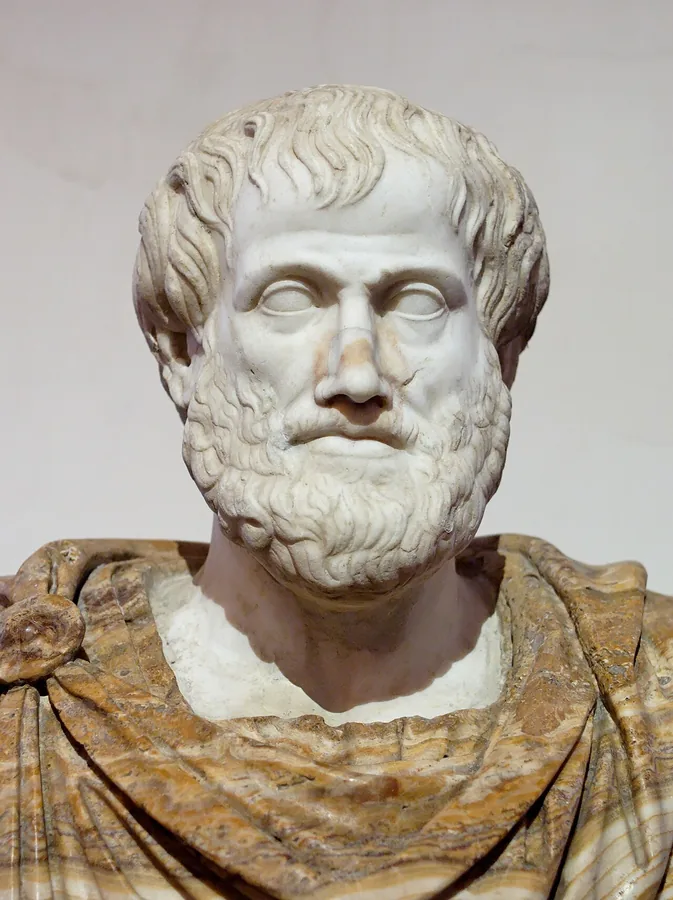
Author
Aristotle
384–322 BC
Aristotle (384–322 BC) was born at Stagira in northern Greece and studied in Plato's Academy at Athens for twenty years. After Plato's death he lived in Asia Minor and Lesbos and tutored the young Alexander of Macedon. In 335 BC he returned to Athens and founded his own school, the Lyceum, where he taught until he left the city shortly before his death.
His surviving works, mostly lecture notes, cover logic, natural science, the soul, metaphysics, ethics, politics and poetics. From the twelfth century, as Latin translations of the full corpus became available, Aristotle became simply "the Philosopher" for the scholastics. His logic structured the method of the schools; his physics, psychology and metaphysics supplied the concepts of act and potency, substance and accident, matter and form that the theologians in this library use throughout.
The library holds a selection of his works, including the Categories, De anima, the Nicomachean and Eudemian Ethics and the Poetics. The Categories is the traditional first book of the logic; the Nicomachean Ethics is the source of much of the moral theology of the Secunda Pars.
Works
Texts currently available in the library.
Categories
Aristotle's Categories in the Greek text distributed by OpenGreekAndLatin First1KGreek.
Constitution of the Athenians
Aristotle's Constitution of the Athenians in the Greek text edited by Frederic G. Kenyon.
De Anima
Aristotle's De Anima in the Greek text of Bekker with R. D. Hicks's English translation, in three books and thirty chapters.
Eudemian Ethics
Aristotle's Eudemian Ethics in the Greek text edited by Franz Susemihl, with H. Rackham's English translation.
Nicomachean Ethics
Aristotle's Nicomachean Ethics in the Greek text edited by Ingram Bywater, with H. Rackham's English translation.
On Virtues and Vices
Aristotle's On Virtues and Vices in the Greek text edited by Immanuel Bekker.
Poetics
Aristotle's Poetics in the Greek text edited by Immanuel Bekker.